
BAND offers organizational tools, privacy, and free access for groups of any size, facilitating connection and communication through features like shared calendars and file sharing.
Resistance band exercises, often available as PDF guides, provide a versatile and accessible method for strengthening the IT band and supporting overall fitness goals.
Sonic Boom utilizes BAND to stay connected, organized, and performance-ready, showcasing the app’s effectiveness for teams and communities seeking streamlined communication.
What is the IT Band?
The IT band, or iliotibial band, is a thick band of fibrous tissue that runs along the outside of the thigh, extending from the hip to just below the knee. It’s not a muscle, but rather a strong connective tissue that plays a crucial role in stabilizing the knee and hip during movement.
Understanding its function is key when considering IT band strengthening exercises, often found in PDF workout guides. The band assists in movements like walking, running, and cycling, and works with muscles like the glutes, quads, and hamstrings.
BAND’s organizational features can help track progress with these exercises. While the IT band itself isn’t directly strengthened (as it doesn’t contract like a muscle), exercises targeting the surrounding muscles can alleviate tension and improve its flexibility. Resistance band workouts, readily available for download, are a popular method for this purpose.
Why Strengthen the IT Band?
Strengthening the muscles surrounding the IT band – glutes, quads, and hamstrings – is crucial for preventing IT band syndrome and improving overall lower body function. While directly “strengthening” the IT band isn’t possible, addressing muscle imbalances can reduce friction and pain.
IT band exercises, often detailed in PDF workout plans, aim to improve flexibility and stability. Utilizing resistance bands, as highlighted in available resources, offers a convenient and effective method. BAND’s features can help organize and track these workouts.
Stronger surrounding muscles support proper knee and hip alignment, reducing stress on the IT band. This is particularly important for athletes and individuals with physically demanding lifestyles; Consistent exercise, guided by PDF resources, promotes long-term joint health and prevents recurring issues.

Understanding IT Band Issues
BAND facilitates group communication, aiding in sharing PDF exercise guides and support for managing IT band discomfort, while resistance bands offer targeted relief.
Common Causes of IT Band Pain
BAND’s organizational features can help groups track training regimens and identify potential causes of IT band pain, often linked to overuse or improper form during activities.
Increased activity levels, like more frequent running or cycling, as highlighted in recent discussions, can contribute to IT band syndrome. A lack of adequate warm-up or cool-down routines, easily shared via PDF guides within BAND, also plays a role.
Muscle imbalances, particularly weakness in the hip abductors and glutes, are frequently cited as a primary cause. Resistance band exercises, readily accessible as downloadable PDFs and discussed on BAND, can address these imbalances.
Poor biomechanics, such as overpronation or improper running technique, can exacerbate the issue. Utilizing BAND to share resources and discuss proper form can be beneficial. Finally, inadequate stretching, easily outlined in PDFs, contributes to tightness and pain.
Symptoms of IT Band Syndrome
IT band syndrome typically manifests as pain on the outside of the knee, often worsening with activity, a detail easily shared within a BAND group for discussion and support.
Pain may radiate up the thigh, and individuals might experience a snapping sensation as the IT band rubs against the lateral femoral epicondyle. PDF guides detailing symptom recognition can be distributed via BAND.
Initially, discomfort may only occur during or after exercise, but it can progress to pain at rest. Resistance band exercises, outlined in downloadable PDFs, can help alleviate symptoms by strengthening supporting muscles.
Swelling or tenderness along the IT band is also common. Utilizing BAND’s features, members can share experiences and resources, including links to PDFs with self-assessment techniques. Early recognition and intervention, facilitated by shared information on BAND, are crucial for effective management.
Warm-up Exercises for IT Band
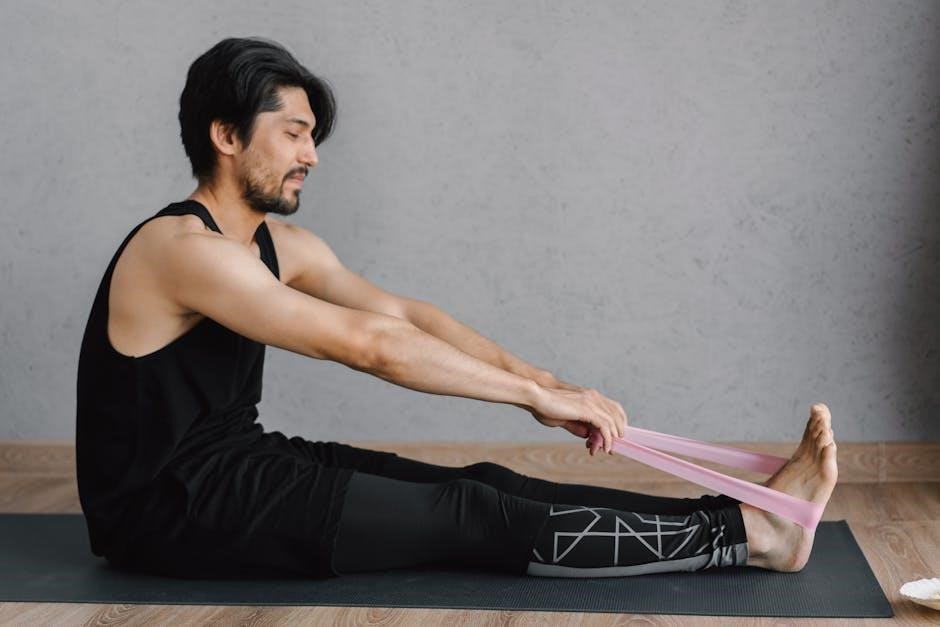
BAND’s shared PDF resources can guide dynamic stretches and foam rolling, activating the IT band before exercise, promoting flexibility and injury prevention.
Resistance band warm-ups, detailed in PDFs, prepare muscles for more intense IT band strengthening exercises, enhancing performance and recovery.
Dynamic Stretching for IT Band Activation
Dynamic stretching prepares the IT band and surrounding muscles for activity, increasing blood flow and range of motion. Utilizing PDF guides featuring exercises like leg swings – both forward/backward and side-to-side – can effectively activate these muscle groups.
BAND’s community resources may offer instructional videos demonstrating proper form for dynamic stretches. Another beneficial exercise is torso twists, gently rotating the upper body while keeping the lower body stable, which indirectly engages the IT band.
High knees and butt kicks are also excellent dynamic warm-up components, promoting hip flexibility and preparing the legs for more strenuous activity. Remember to perform these stretches in a controlled manner, focusing on smooth movements rather than bouncing. A well-executed dynamic warm-up, guided by a PDF or BAND tutorial, is crucial for maximizing exercise effectiveness and minimizing injury risk.
Foam Rolling the IT Band
Foam rolling is a self-myofascial release technique that can help alleviate tension and improve flexibility in the IT band. Many PDF guides detail proper foam rolling techniques, emphasizing slow, controlled movements along the outer thigh.
Begin by positioning yourself on the foam roller with the side of your thigh against it, supporting your weight with your forearm and opposite leg. Slowly roll from the hip to just above the knee, pausing on any tender spots for 20-30 seconds.
BAND’s resources might offer visual demonstrations of correct foam rolling form. While it can be uncomfortable, avoid rolling directly on the IT band itself; focus on the surrounding muscles. Consistent foam rolling, supplemented by exercises from a PDF workout, can contribute to improved mobility and reduced pain. Remember to breathe deeply throughout the process.

Resistance Band Exercises for IT Band Strengthening
Resistance band workouts, often found as PDF downloads, offer accessible IT band strengthening. BAND facilitates sharing these resources within groups for collaborative fitness!
Standing IT Band Exercises
Standing IT Band Exercises utilize resistance bands to target the iliotibial band and surrounding musculature, offering convenient strengthening options. Many resources, including downloadable PDF guides, detail proper form and progression for these exercises.
Side Leg Raises with Resistance Band involve looping a band around the ankles and lifting one leg laterally against resistance, enhancing hip abductor strength. Standing Hip Abduction with Band similarly employs a band around the ankles, focusing on outward leg movement to engage the gluteus medius and stabilize the hip.
These exercises, often presented in resistance band workout posters or PDFs, are easily incorporated into a routine. BAND’s group features allow members to share these PDFs and track progress together, fostering a supportive fitness environment. Remember to maintain proper posture and controlled movements throughout each repetition.
Side Leg Raises with Resistance Band
Side Leg Raises with Resistance Band are a foundational exercise for IT band strengthening, frequently detailed in IT band exercise PDFs. Begin by securing a resistance band around both ankles, ensuring a comfortable yet challenging tension. Stand with feet hip-width apart, maintaining a slight bend in your knees for stability.
Slowly lift one leg out to the side, keeping your body upright and avoiding any forward or backward movement. Focus on engaging your outer hip and gluteal muscles throughout the lift. Control the movement as you lower your leg back to the starting position.
Many resistance band workout PDFs recommend 10-15 repetitions per leg, completing 2-3 sets. BAND groups can share these PDFs for collective learning and motivation, promoting consistent practice and proper form.
Standing Hip Abduction with Band
Standing Hip Abduction with Band is a key exercise found in many IT band strengthening PDF guides, targeting the gluteus medius which directly supports IT band function. Secure a resistance band around your ankles, ensuring a snug but comfortable fit. Stand tall with feet hip-width apart, maintaining a slight bend in your knees.
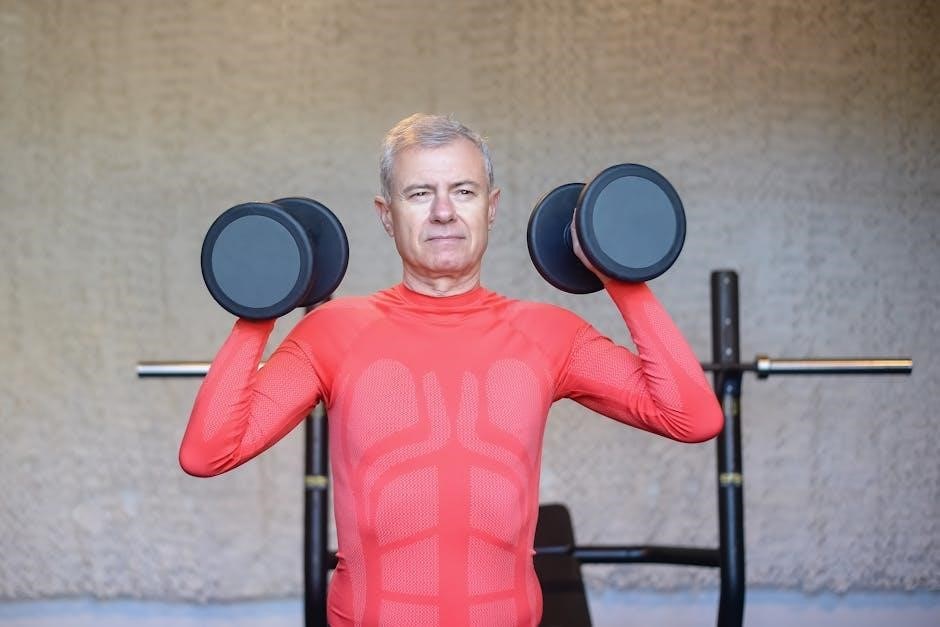
Keeping your core engaged and back straight, slowly move one leg directly out to the side, against the resistance of the band. Focus on initiating the movement from your hip, not your lower back. Control the return to the starting position, resisting the band’s pull.
Resistance band workout PDFs often suggest 15-20 repetitions per leg, across 3 sets. Utilizing BAND for sharing these resources fosters a supportive environment for consistent training and proper technique.
Lying Down IT Band Exercises
Lying Down IT Band Exercises, frequently detailed in IT band strengthening PDFs, offer controlled movements ideal for isolating key muscle groups. These exercises are excellent for beginners or those recovering from injury, providing a lower-impact approach to strengthening; Many resistance band workout PDFs highlight the benefits of these positions.

Common exercises include Clamshells and Lateral Walks. Clamshells target the gluteus medius, crucial for hip stability, while Lateral Walks engage the glutes and IT band directly. Utilizing a BAND platform allows for easy sharing of instructional videos and form checks.
PDF guides typically recommend 3 sets of 15-20 repetitions for each exercise. Remember to maintain proper form throughout, focusing on controlled movements and engaging the core. Consistent practice, guided by reliable resources, is key.
Clamshells with Resistance Band
Clamshells with Resistance Band, a staple in many IT band strengthening PDF guides, effectively target the gluteus medius and minimus – vital for hip stability and IT band function. This exercise is often recommended for individuals experiencing knee pain or imbalances, as detailed in resistance band workout resources.
To perform, lie on your side with knees bent and a resistance band looped around your thighs, just above the knees. Keeping your feet together, lift your top knee while maintaining a neutral spine. Focus on squeezing your glutes throughout the movement.
PDFs typically suggest 3 sets of 15-20 repetitions per leg. Utilizing the BAND app can facilitate sharing form tips and progress tracking. Proper form is crucial; avoid rotating your pelvis or lifting your upper leg too high.
Lateral Walks with Resistance Band
Lateral Walks with Resistance Band, frequently detailed in IT band strengthening PDFs, are excellent for activating the gluteus medius, a key muscle for stabilizing the hips and controlling IT band tension. This exercise is often included in comprehensive resistance band workout routines, promoting balanced leg strength.
Begin by placing a resistance band around your ankles or just above your knees. Maintain a slight bend in your knees and keep your back straight. Step sideways, keeping tension on the band throughout the movement. Take approximately 10-15 steps in one direction, then repeat in the opposite direction.
PDF guides often recommend 3 sets of 10-12 steps per direction. The BAND app could be used to share instructional videos and monitor progress. Focus on controlled movements and avoid letting your knees cave inward. This exercise helps improve hip abduction strength, crucial for IT band health.
Seated IT Band Exercises
Seated IT Band Exercises, commonly found within IT band strengthening PDFs, offer a low-impact approach to targeting the hip abductors and stabilizing muscles crucial for IT band function. These exercises are particularly beneficial for individuals seeking modifications or those recovering from injury, as detailed in many workout guides.
Seated Hip Abduction with Band and Seated Banded Leg Extensions are frequently included. Utilizing a resistance band looped around the thighs, these movements focus on external rotation and hip abduction. The BAND app could facilitate sharing of exercise demonstrations and tracking of sets and reps.
PDF resources emphasize maintaining good posture throughout the exercises. Perform 3 sets of 12-15 repetitions for each exercise. These seated variations provide a controlled environment for strengthening, contributing to improved alignment and reduced IT band stress.
Seated Hip Abduction with Band
Seated Hip Abduction with Band, a staple in many IT band strengthening PDF guides, effectively targets the gluteus medius, a key muscle for hip stabilization and IT band support. This exercise is often recommended as a foundational movement for building strength and improving lower body alignment.
To perform, sit upright on a chair with a resistance band looped around your thighs, just above the knees. Maintaining a straight back and engaged core, slowly abduct (move) your legs outwards against the band’s resistance. Focus on controlled movements, avoiding any rocking or momentum.
PDF resources typically suggest 3 sets of 15-20 repetitions. The BAND app could be used to track progress and share form tips. Proper execution is crucial; visualize squeezing your glutes throughout the movement for optimal engagement and results.
Seated Banded Leg Extensions
Seated Banded Leg Extensions, frequently detailed in IT band strengthening PDFs, isolate the quadriceps while subtly engaging the IT band for stabilization. This exercise enhances knee joint control and contributes to overall lower limb strength, crucial for preventing imbalances.
Securely anchor a resistance band around a stable object. Sit on a chair, looping the other end of the band around your ankle. Slowly extend your leg forward, resisting the band’s pull, until your leg is straight. Maintain a controlled tempo throughout the movement, avoiding jerky motions.
Many PDF guides recommend 3 sets of 12-15 repetitions per leg. Utilizing the BAND app for tracking sets and reps can aid in consistent progress. Focus on fully contracting the quadriceps and maintaining proper form to maximize effectiveness and minimize risk of injury.
Advanced IT Band Strengthening Exercises
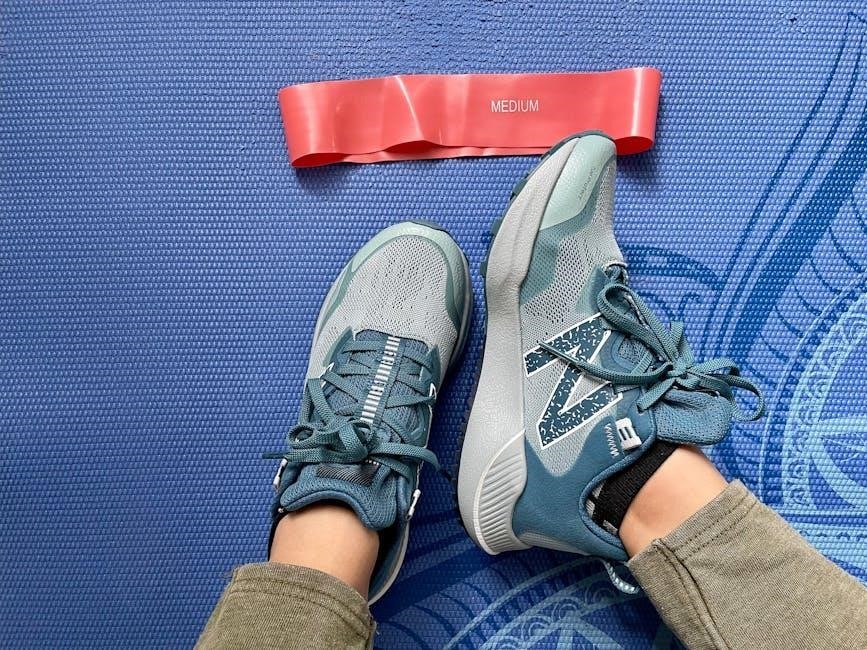
PDF guides often include challenging exercises like banded single leg deadlifts, squats, and lunges, demanding greater stability and IT band engagement.
BAND’s organizational features can help track progress with these advanced movements, promoting consistent and effective IT band strengthening.
Single Leg Deadlifts with Band
Single leg deadlifts with a resistance band are an advanced exercise targeting the IT band, glutes, and hamstrings, enhancing stability and strength. Many IT band strengthening PDF guides detail proper form: secure the band around both feet, holding one end in each hand.
Hinge at the hips, keeping your back straight and core engaged, as you lift one leg straight back. Lower the torso towards the ground while maintaining a slight bend in the supporting knee. The resistance band increases the challenge, forcing greater IT band activation to control the movement.
Focus on a slow, controlled descent and ascent. BAND’s communication features could be used to share form check videos with a trainer or workout buddy. Aim for 8-12 repetitions per leg, completing 3-4 sets. This exercise improves balance, coordination, and IT band resilience.
Banded Squats
Banded squats are a fantastic exercise for strengthening the IT band, glutes, and quads, often detailed in IT band strengthening PDF resources; Place a resistance band around your thighs, just above the knees. Ensure the band remains taut throughout the entire movement.
Stand with feet shoulder-width apart, toes slightly outward. Initiate the squat by pushing your hips back and bending your knees, keeping your back straight and core engaged. The band provides added resistance, forcing your IT band to work harder to stabilize your knees and maintain proper form.
Focus on driving through your heels as you return to the starting position. BAND’s organizational tools could help track sets and reps. Perform 3-4 sets of 10-15 repetitions. This exercise enhances lower body strength and improves IT band function, promoting stability and reducing pain.
Banded Lunges
Banded lunges, frequently outlined in IT band strengthening PDF guides, are excellent for targeting the glutes, quads, and, crucially, the IT band. Secure a resistance band around both legs, positioned just above the knees, maintaining consistent tension.
Begin by stepping forward with one leg, lowering your body until both knees are bent at approximately 90-degree angles. Keep your front knee aligned over your ankle and your back knee hovering just above the ground. The band’s resistance challenges your IT band to stabilize your knee during the lunge.
Push off with your front foot to return to the starting position. Alternate legs with each repetition. BAND’s features could aid in tracking progress. Aim for 3 sets of 12-15 lunges per leg. This exercise improves lower body strength, balance, and IT band stability, potentially alleviating discomfort.

Integrating IT Band Exercises into a Routine
PDF guides suggest incorporating IT band exercises 2-3 times weekly, alongside other strengthening routines, utilizing BAND for scheduling and tracking progress effectively.
Frequency and Sets/Reps
PDF workout guides commonly recommend performing IT band strengthening exercises two to three times per week, allowing for adequate recovery between sessions. Begin with 2-3 sets of 10-15 repetitions for each exercise, focusing on controlled movements and proper form.
As strength improves, gradually increase the resistance by using heavier resistance bands or increasing the number of repetitions. Listen to your body and avoid pushing through pain. Consistency is key; regular integration of these exercises into your routine, facilitated by organizational tools like BAND, will yield the best results.
Consider alternating between different exercises each session to target the IT band from various angles. Remember that resistance band workouts are scalable, making them suitable for all fitness levels. Prioritize quality over quantity, ensuring each repetition is performed with precision and mindful engagement of the targeted muscles.
Combining with Other Strengthening Exercises
A comprehensive approach to IT band health, often detailed in PDF workout plans, involves integrating these exercises with broader lower body and core strengthening routines. Include exercises targeting glutes, hamstrings, and quads, as these muscle groups work synergistically with the IT band.
Exercises like squats, lunges, and deadlifts provide a solid foundation, while incorporating hip abduction and external rotation movements further enhances stability. Utilizing platforms like BAND can help organize and track progress across various exercises.
Remember that a strong core is crucial for maintaining proper alignment and preventing compensatory movements. Resistance band exercises can be seamlessly combined with bodyweight or weighted exercises for a well-rounded workout. Prioritize functional movements that mimic real-life activities to maximize benefits and minimize injury risk.

Cool-down and Stretching
PDF guides often include post-exercise stretches, and BAND facilitates sharing recovery tips; static stretches improve flexibility, aiding IT band recovery and preventing soreness.
Static Stretching for IT Band
Static stretching following IT band strengthening is crucial for improving flexibility and reducing muscle tension, often detailed within PDF exercise guides. One effective stretch involves standing and crossing the affected leg behind the other, then gently leaning forward to feel a stretch along the outside of the hip and thigh.
Hold this position for approximately 30 seconds, ensuring a controlled and comfortable stretch – avoid bouncing. Another beneficial stretch is the supine IT band stretch, performed by lying on your back with the affected leg crossed over the other and pulling it towards your chest.
BAND communities frequently share variations and modifications of these stretches, emphasizing proper form to maximize benefits and minimize risk of injury. Remember to breathe deeply throughout each stretch, promoting relaxation and enhancing the stretch’s effectiveness. Consistent static stretching contributes significantly to long-term IT band health and injury prevention.
Post-Exercise Recovery
Post-exercise recovery is paramount after IT band strengthening, often outlined in comprehensive PDF guides. Prioritize hydration by replenishing fluids lost during activity, aiding muscle repair and reducing soreness. Incorporate a cool-down period involving light cardio, like walking, to gradually lower your heart rate and prevent muscle stiffness.
Consider utilizing BAND communities to share recovery tips and experiences with fellow fitness enthusiasts. Applying ice packs to the IT band area for 15-20 minutes can help minimize inflammation and alleviate discomfort.
Adequate sleep is also vital, allowing your body to repair and rebuild muscle tissue. Gentle foam rolling, as detailed in many PDF resources, can further enhance recovery by releasing muscle tension. Prioritizing these recovery strategies ensures optimal results and prevents potential setbacks.
Resources and Further Information
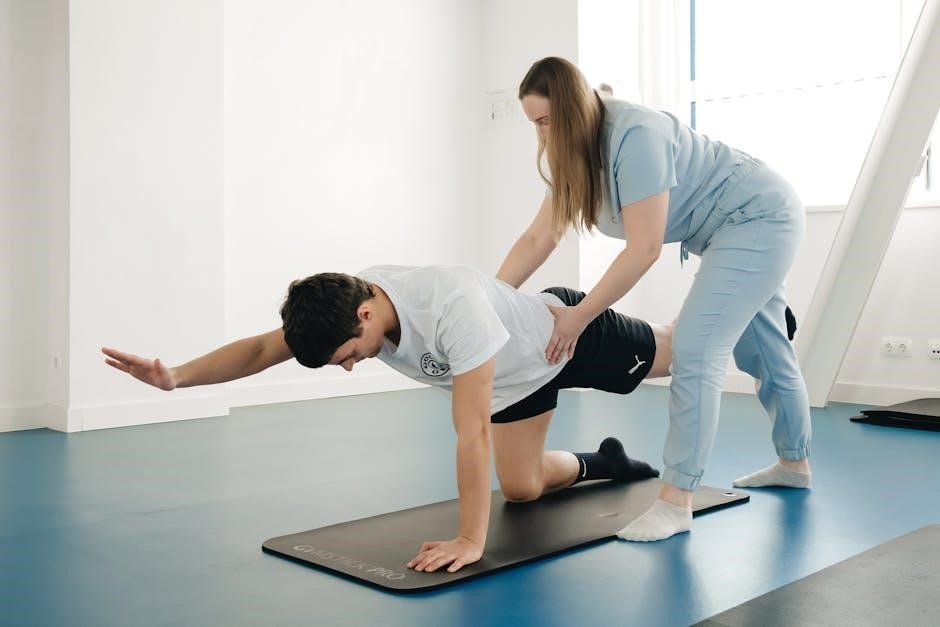
PDF downloads offer structured IT band exercise routines, while BAND tutorials provide guidance on app features and community engagement for support.
Online guides and BAND’s resources help navigate exercises and connect with champions for optimal strengthening and recovery.
PDF Downloads for IT Band Exercises
Numerous downloadable PDF resources provide comprehensive IT band strengthening programs, often detailing exercises with visual aids and step-by-step instructions for effective implementation.
These guides frequently include variations for different fitness levels, catering to beginners and advanced athletes alike, ensuring accessibility and progressive overload.
Resistance band workouts are commonly featured in these PDFs, offering portable and cost-effective solutions for strengthening the muscles surrounding the IT band.
Many resources also incorporate stretching routines designed to improve flexibility and reduce tension in the IT band, promoting optimal biomechanics and injury prevention.
Searching online for “IT band exercises PDF” yields a wealth of options, including programs focused on specific activities like running or cycling, tailoring the exercises to relevant movements.
Always prioritize resources from reputable sources, such as physical therapy clinics or certified trainers, to ensure the accuracy and safety of the exercises presented within the PDF.
Online Tutorials and Guides
A plethora of online tutorials and guides complement PDF downloads, offering dynamic demonstrations of IT band strengthening exercises, enhancing understanding and proper form.
Video platforms host numerous channels dedicated to fitness and physical therapy, providing visual instruction on exercises utilizing resistance bands and bodyweight techniques.
BAND’s tutorial section offers guidance on app features, but broader fitness resources demonstrate exercises targeting the IT band, aiding in injury prevention and performance enhancement.
These online resources often break down complex movements into manageable steps, catering to various learning styles and ensuring accessibility for all fitness levels.
Interactive guides may include quizzes or assessments to help users identify areas of weakness and tailor their exercise routines accordingly, promoting personalized training.
Remember to cross-reference information from multiple sources and consult with a healthcare professional before starting any new exercise program, ensuring safety and effectiveness.